After meandering through the ins and outs of Portugal’s D8 visa and Brazil’s digital nomad route individually, I found myself wondering how the two compare side by side. For anyone weighing up Portugal vs Brazil for digital nomads, the similarities start to fade once the application process comes into full view.
For one thing, the financial expectations and application routes vary, and so does what happens after approval. Some of the differences are fairly small, whereas others could have a much bigger bearing on your plans (not to mention your budget).
With the two visas taking such different approaches, I thought it would be helpful to compare the Portugal and Brazil digital nomad visa processes directly.
The basic visa options
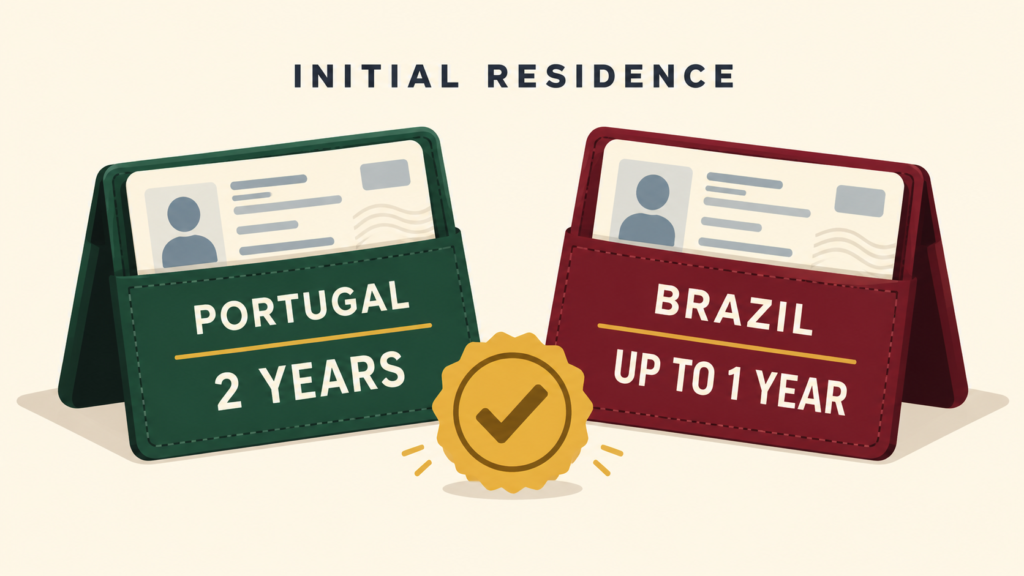
Portugal’s digital nomad route, better known as the D8 Visa, essentially comes in two forms. The temporary stay option covers periods of less than a year, while the residence option is designed for individuals who plan to spend longer there. If you take the residence route, you first enter the country using the visa and then complete the residence permit process with AIMA. Once issued, the residence permit is valid for two years and can be renewed for successive three-year periods.
The Brazilian digital nomad visa follows a similar basic idea, covering people who carry out their professional activities remotely while their work relationship and income come from outside the country. The initial residence period can last up to one year, and you can renew it for the same length of time. Interestingly, Brazil also allows some applicants who are already there legally to apply from inside the country, which I’ll come back to shortly.
Portugal has the much higher income requirement
The financial gap is probably the first thing I’d look into before getting attached to either option, especially once you compare the Portugal digital nomad visa requirements a little more closely. Portugal’s remote-work visa asks you to show that your average monthly professional income over the previous three months was at least four times the country’s minimum monthly wage. To give you a sense of how shockingly high that bar is, Portugal’s national minimum wage is €920 in 2026, which brings the D8 income threshold to €3,680 per month.
The three-month average can catch you out if your freelance income changes from month to month. Anyone researching a digital nomad visa in Portugal would therefore need to look at recent income rather than relying on one particularly strong month. I would also want my contracts, invoices, bank statements and payment records to show exactly where the money came from and when it arrived.
Brazil sets a much lower threshold, asking applicants to show foreign-source income of at least US$1,500 per month or a minimum of US$18,000 in available bank funds. The savings alternative can be particularly useful for freelancers with irregular income because they can qualify through available funds (so I’d start saving early). On the figures alone, I’d say Brazil is clearly much more accessible to someone who works remotely but does not bring in €3,680 every month.
The paperwork overlaps, but the process diverges
At a glance, the paperwork for both countries has quite a bit in common. In either case, you essentially show who you are, where your income comes from, that you work remotely and that your criminal record is clear.

Portugal requires evidence that you work remotely for an employer or clients outside the country. Depending on how you work, this could mean providing an employment contract, service agreement or other evidence of your professional relationship. The usual visa paperwork also includes documents covering accommodation, criminal records, insurance and your ability to support yourself. The exact checklist can still vary slightly depending on how you’re applying and the consular post handling the application.
Brazil calls for much of the same evidence, including a declaration confirming that you can work remotely, along with documentation linking you to a foreign employer, such as an employment or service contract. Additionally, the consular application asks for health insurance valid in Brazil, evidence of transport into the country and a criminal record certificate.
As you would expect, applying from inside Brazil changes the paper trail somewhat. That’s because, evidently, you’re applying for residence from within the country instead of requesting a visa through a consulate. You will need criminal record certificates for each place where you lived during the previous five years. You’ll also need a declaration confirming that you have no criminal record in any country during that period and evidence that you meet the digital nomad requirements. If your identity document doesn’t show your parents’ full names, you’ll also need another document that does.
Applying after arrival is where Brazil opens another door
The ability to apply after arrival is probably the biggest practical difference between the two routes. Someone who has already entered Brazil legally as a visitor can use MigranteWeb to apply for digital nomad residence, allowing a little more wiggle room.
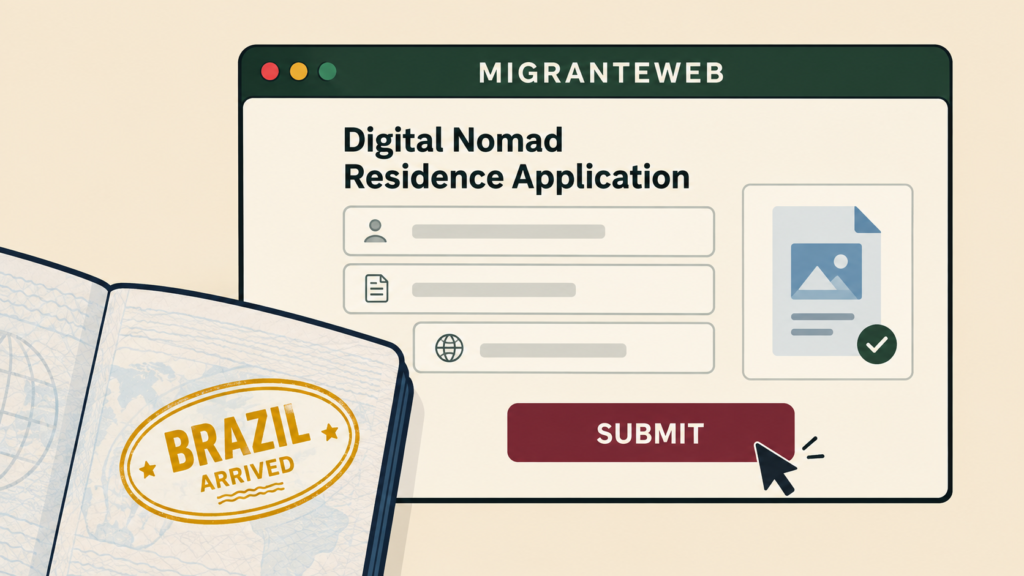
Portugal keeps to the outside-country route and follows a more fixed sequence. With the residence version, you complete the consular stage first and travel to the country before moving on to the AIMA permit process after arrival.
Costs are worth checking before committing to either process as well. Portugal’s total is a bit harder to pin down because the residence route involves an initial visa fee and a separate AIMA charge for the residence permit. Brazil is easier to put numbers on for the in-country application, as the government currently lists the residence authorisation fee at R$168.13. Consular visa fees can vary depending on your nationality and the post handling the application, so I’d confirm the exact amount with the relevant Brazilian consulate before applying.
What happens after approval
Once everything is approved, the two countries have timelines that may cater to different kinds of plans. Portugal’s residence permit starts with a two-year term, which feels like a different proposition next to Brazil’s initial digital nomad residence of up to one year.
Once you have the Portuguese residence permit, there’s also a travel perk for anyone hoping to see more of Europe. Since Portugal is part of the Schengen Area, a valid residence permit generally lets you make short visits to other member countries for up to 90 days within any 180-day period, provided you meet the usual entry conditions.
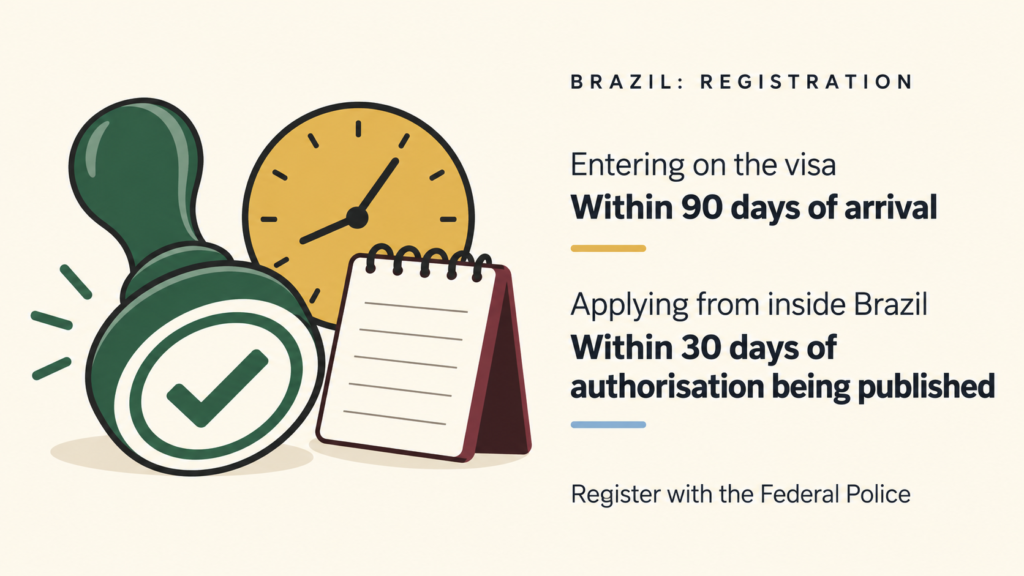
Portugal still has the AIMA residence-permit stage to get through after arrival, but Brazil has a few boxes left to tick, too. Anyone entering Brazil on the temporary digital nomad visa needs to register with the Federal Police within 90 days of arrival. If you applied from inside the country instead, you also complete the registration process once your residence has been approved, in this case within 30 days of the authorisation being published. The registration gives you an RNM number, after which you receive your CRNM residence card (currently costing R$204.77).
Longer stays play by different rules
Brazil’s one-year residence period is a little more open-ended than it first sounds, considering you can renew it for the same length of time again without the rules limiting you to a single renewal. I may sound like a broken record here, but the comparison is worth repeating because Portugal gives you a much longer initial stretch, starting with two years before moving into three-year renewals.
However, if you’re considering staying in Portugal long enough to qualify for citizenship, the rules around Portuguese citizenship changed in May 2026. I mention this because you’ll still come across guides quoting the old five-year naturalisation period, even though that’s no longer the general rule. For applications made from 19 May 2026 onward, you’ll generally need seven years of residence if you’re from a Portuguese-speaking country or an EU member state. For other nationalities, the requirement rises to ten years.
Tax needs its own calculation
A digital nomad visa does not decide your tax position on its own, so you’ll need to work that out separately if you’re planning a longer stay. Portugal can treat you as a tax resident once you spend more than 183 days there within a 12-month period. You can also qualify if you have a home there that you intend to keep and use as your main residence. Tax residents generally pay Portuguese tax on income earned both there and abroad, although tax treaties and other relief can change what you actually owe.
Brazil’s day count reaches the tipping point at 184 days within a 12-month period, and those days don’t have to be consecutive. Other rules can also make you a tax resident sooner, depending on your circumstances.
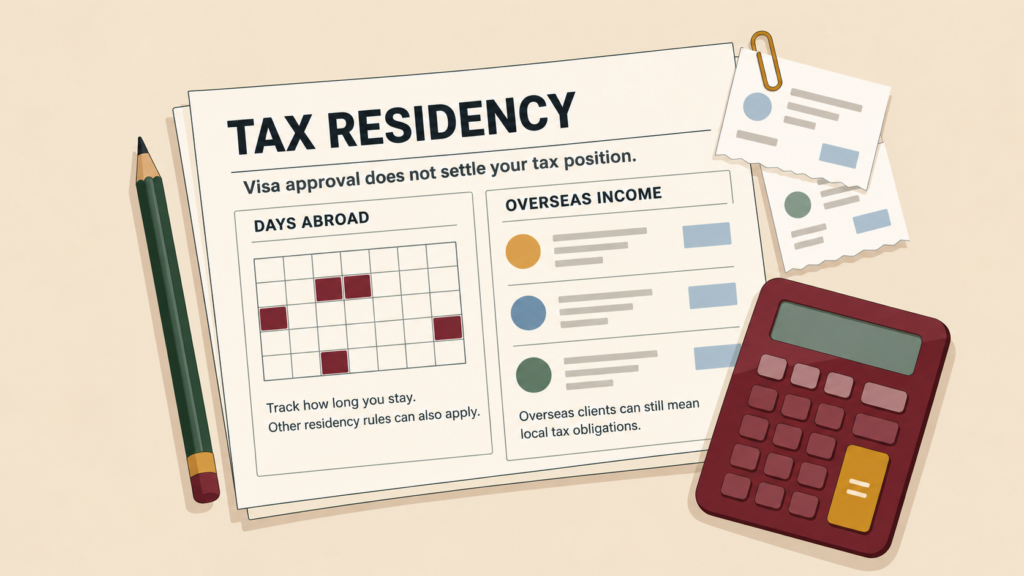
If I were choosing between the two visas, I wouldn’t assume that having overseas clients automatically keeps my income outside the local tax system. If I planned to spend most of the year in either country, I’d include professional tax advice in my moving budget.
Which visa process would I choose?
For me personally, Brazil would probably edge it on the application process. The lower income threshold is the first thing working in its favour, while the US$18,000 funds option gives freelancers another way to qualify if their earnings fluctuate from month to month. The option to apply from within Brazil also gives you a welcome bit of breathing room because you can enter legally as a visitor and deal with the residence application after arrival.
Portugal sets a much higher financial bar, and the residency process continues with AIMA after you arrive. On permit length, though, Portugal may be the more convenient option, seeing as it starts from two years before moving into successive three-year renewals.
Portugal also has the obvious pull of putting you in the Schengen Area, which would be hard to overlook if I wanted to base myself in Europe and comfortably met the income requirement. Brazil’s shorter residence periods could have their own merits if I preferred to take the move a year at a time rather than commit too far ahead. While Brazil would be my pick for reasons both apparent and less so, if I were in your shoes, I’d ultimately predicate the final choice on my priorities and plans for the next few years.