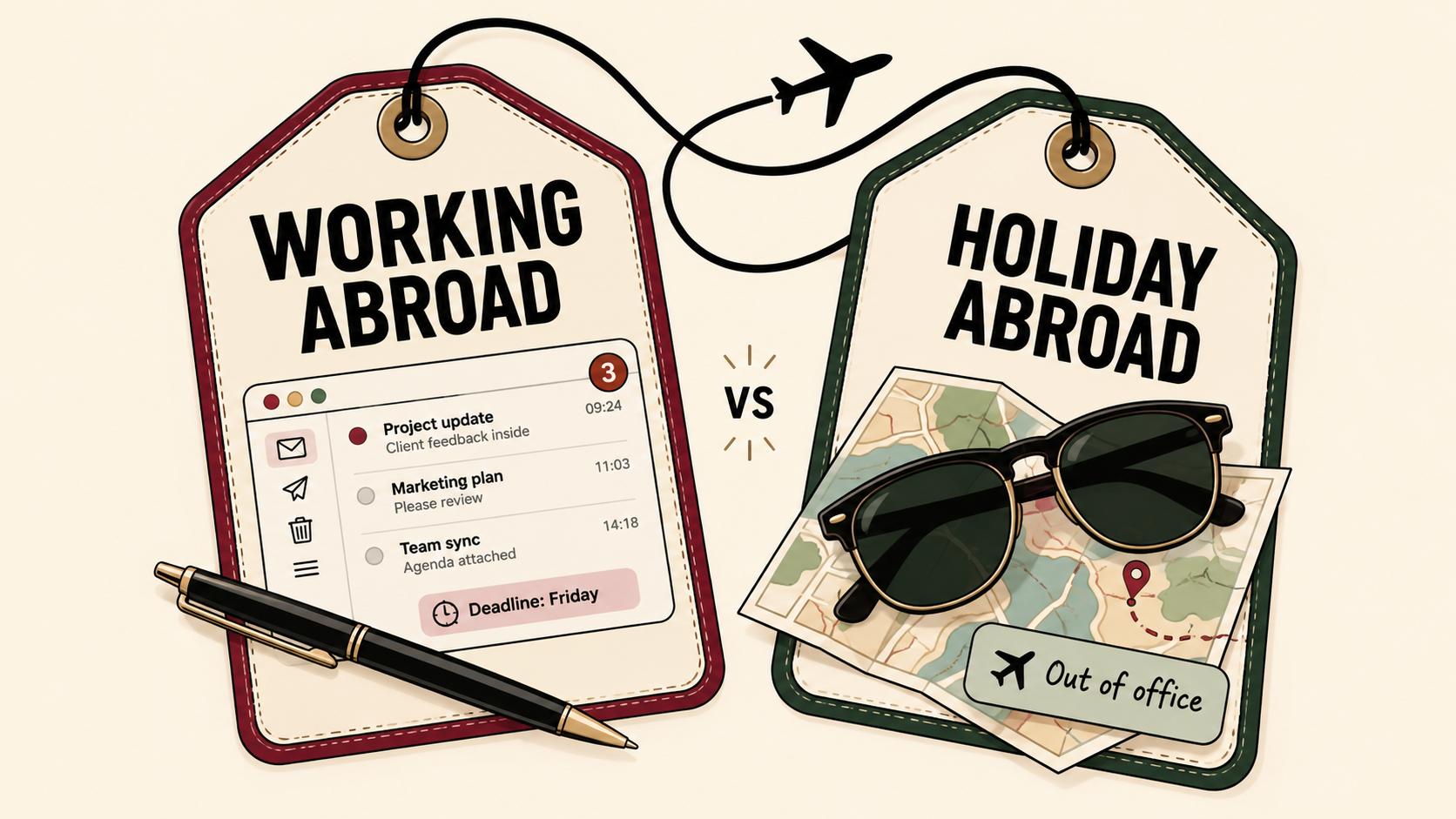
Working abroad is a dream for many, and for a time, the idea held a certain magic for me too. The mental image is pretty superb and straight out of a glossy travel magazine, if you ask me. You can finish an assignment and spend the evening somewhere you might otherwise only see on holiday. The actual working day, however, is rather less photogenic. Client emails still need answering, and deadlines keep their usual inconvenient habit of approaching. How much you feel like exploring afterwards can depend on how mentally demanding the day has been.
Working as a freelance writer myself, I can see why the idea of taking your work abroad seems so inviting. The immediate thought is that you’re no longer tied to a particular desk. Plus, the thought of changing your surroundings without putting your career on hold obviously sounds like a vacation in and of itself. You could even think of the days off in between as glorified weekends. But we may overlook or underestimate quite a lot of things, so I’ll cover both the good parts and the bad parts here.
A change of scenery doesn’t mean time off
When you’re on holiday, your days are generally your own to spend, and no one can get in the way. That also means you don’t owe anyone an explanation for why you’ve decided to do absolutely nothing until dinner or why you’re suddenly frolicking in a park without any aim, just exercising free will.
Working abroad comes with a less liberating arrangement, however. If a client expects a draft on a Friday, the deadline still applies, even if Thursday brings perfect beach weather. Freelancers sometimes have more wiggle room to move things around, although that depends on their workload and the promises they’ve already made.
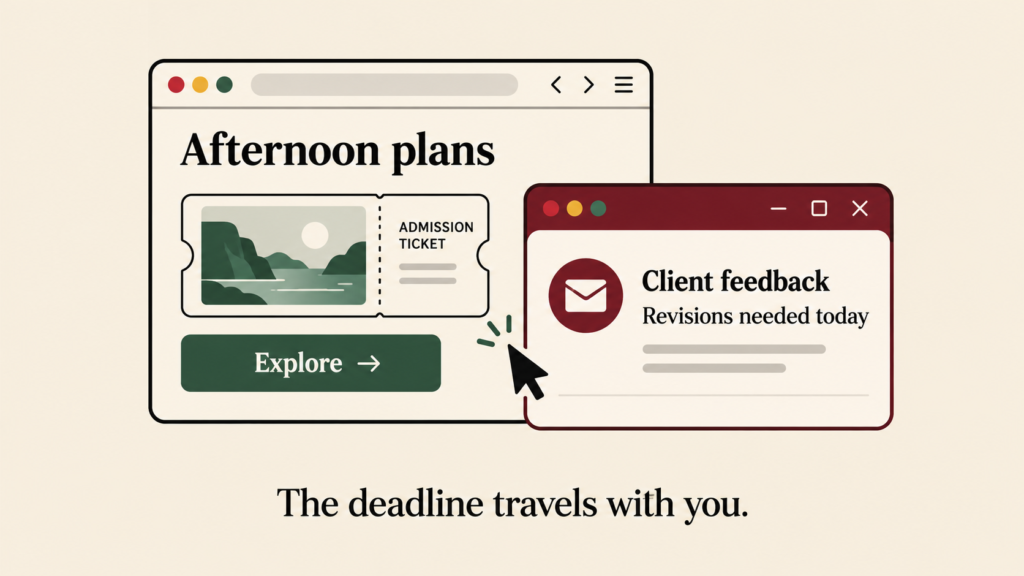
I think people sometimes confuse the freedom of remote work with having unlimited free time. Being able to choose where you work is great and all, but the hours you put in still have to come from somewhere. An evening of sightseeing might mean finishing your work earlier that same morning, which can be a perfectly reasonable trade-off if you’ve planned for it. The experience becomes less leisurely if you’ve convinced yourself you’ll somehow finish eight hours’ worth of work in three.
Some extend their trips by working during part of their stay and taking a few days off afterwards. That does make sense, provided you treat the working days exactly as such, with no slacking off allowed. With a whole lot of self-discipline, you can still sneak in some spontaneity, of course, though not nearly as much as during a proper break.
A holiday only shows you one side of a place
A holiday, even if it’s brief, lets you focus on the enjoyable parts of a destination. You might eat out more often than you would at home and spend more of your days exploring. You might even let go of minor inconveniences because you’ll be leaving in a week anyway. Even a disappointing meal can become a funny travel anecdote by the time you get back.
Staying somewhere to work changes what you notice because we human beings have selective focus after all. The nearest supermarket becomes a higher priority than the restaurant everybody recommends. You also start to care about the noise from the street and whether the flat has a comfortable place to sit for several hours. A rental that seemed charmingly quaint for a weekend can become considerably less so when you’re trying to concentrate on a complicated assignment.
There’s also the fact that everyday life doesn’t stop because you’ve crossed a border. You’ll still have to deal with mundane errands regardless of your mood or schedule. Working abroad can still give you more time to get to know a place, but much of that familiarity develops through everyday routines. From personal experience, I don’t see that as a disadvantage. My perspective is that you may end up understanding a destination better when you aren’t rushing to fit every famous attraction into a few days.
Your budget starts behaving differently
Holiday expenditures usually come with a finish line and fewer considerations (read: worries). You know roughly how long you’ll be away, and that factors into how much you’re comfortable spending during the trip. You may then plan your itinerary accordingly and set aside some extra money for gifts and emergencies.
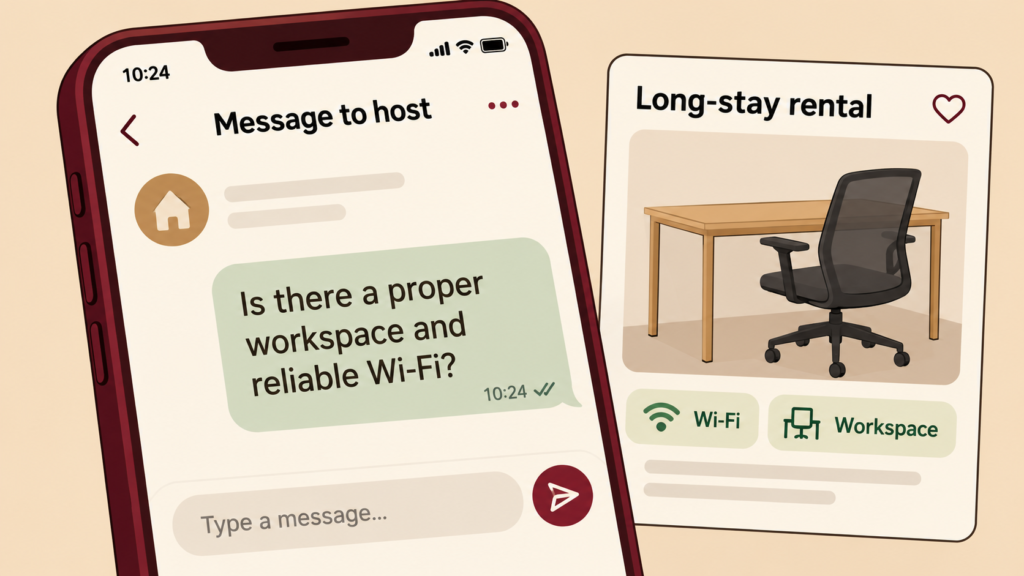
Working abroad for a longer period alters the calculations involved. That means accommodation needs to suit your lifestyle for the entire stay, and paying extra for reliable internet or a proper setup might be the better idea. Transport costs can become part of your regular expenses as well. If you’re still paying rent or bills back home, you also have to consider them. I’d check my bank’s foreign transaction fees before leaving too, because even small charges can add up over several months.
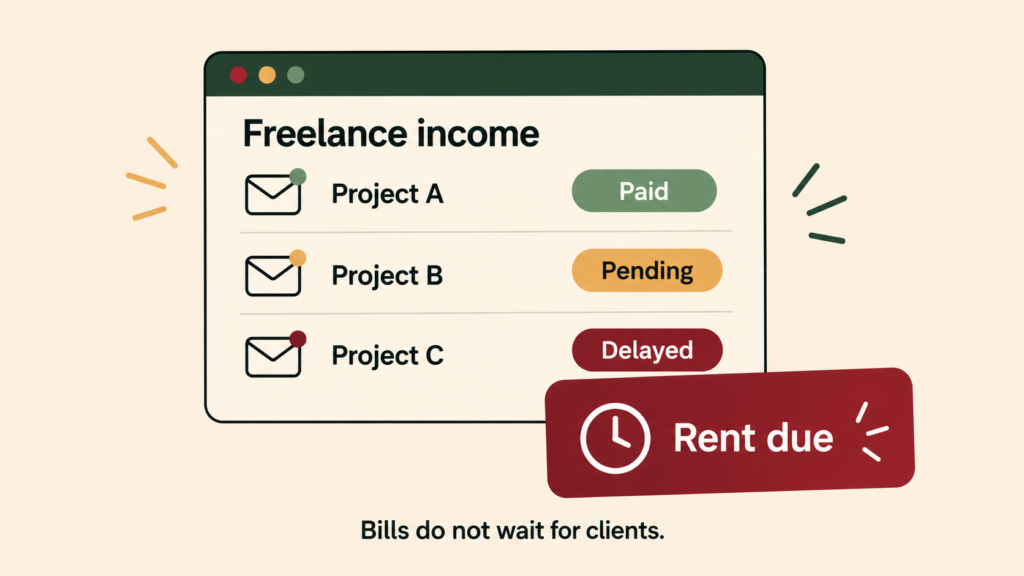
To add to the challenge, fluctuating income can leave freelancers trying to balance a budget that refuses to stay still. You might have a very good month followed by one in which a client delays payment or a planned project falls through. Based on that, I wouldn’t want to hinge a stay abroad on the assumption that every month will be equally profitable. Having money saved for rainy days is much more realistic than not setting anything aside and simply hoping for the best.
Being abroad doesn’t guarantee you’ll feel like exploring
When you’re working abroad, you may initially think you should use every spare hour productively, preferably by experiencing something impressive. You’ve made the effort to travel, so spending a Saturday indoors can feel like a missed opportunity, and you obviously don’t want FOMO.
Except work can be tiring anywhere, no matter how fun your surroundings are (I sometimes wonder how Disney World employees feel about that). Some days, finishing what you’ve committed to is enough, and your plans for the rest of the day might just involve staying in, binge-watching your favourite show and then calling it a night. A holiday usually gives you a defined period to rest from work, and that really does affect your energy levels and how you spend your time. When you’re working abroad, you have to fit your R&R into a normal week alongside everything else.
There’s a social difference as well, because working remotely may not give you as many opportunities to socialise as you would have on holiday (except on your days off). Meeting people takes effort, especially when your social battery is low and your brain feels foggy. Plus, when you’re finally free and feeling up to it, your hours off might not match theirs.
There’s also the paperwork to reckon with
A holiday and a period of remote work can look similar in photographs, but immigration rules, unsurprisingly, may beg to differ. Having permission to enter a country as a tourist doesn’t automatically give you the green light to work from there. The rules can depend on various factors, such as the country, the type of work, who pays you and the purpose of your stay.
The UK, for instance, allows visitors to carry out certain work-related activities connected to overseas employment, provided that working remotely isn’t the main purpose of the visit. That’s a fairly specific condition, and it would be a mistake to assume every other destination follows the same rules. Longer stays can bring a fresh batch of questions about tax obligations. Employees may also need approval from their employer before working in another country.
I know paperwork isn’t anybody’s favourite part of planning a trip, but I’d rather confirm what I’m allowed to do before going ahead and booking accommodation for several months. Even if a country offers a digital nomad visa, I’d still check the government’s eligibility requirements and conditions.
How I’d plan a working stay abroad
If I were planning a period of working abroad, I’d sort out the workload side of things before turning my attention to the destination photographs. I’d work out how many hours I’d need to work each day and whether I could meet my existing commitments without spending every evening catching up. The accommodation would have to be comfortable enough for an ordinary working day too. I’d also pack a few familiar comforts, particularly things that help me unwind and feel more at home.
Proper days off would be a priority too, ideally without finding twice as much work waiting for me the following morning. I wouldn’t expect to feel like doing something exciting every day, nor would I consider spending a quiet day indoors a failure to make the most of being abroad. People need uneventful afternoons wherever they happen to live, and I imagine I’d cherish them just as much in a new country. Of course, when my schedule allows it, I’d paint the town red.
A holiday lets you escape your usual responsibilities for a while. Working abroad allows you to take some of those responsibilities with you and experience another place around them. Overall, I can see the attraction of both, but I’d want to be clear about what kind of trip I was planning before assuming that a laptop and a plane ticket were all I needed.